Author Archives: Scott

The Year in Reading, 2025

Last January, I set my reading goal for the year to 75 books, 25 less than the year prior, to give myself a little room. When I predicted at that time that the goal was easily attainable as long as I stayed single, I had no idea how precisely right I would be: Kari and I started dating in the spring of 2025, and by the end of the year, I had read only 53 books. To really drive the point home: from the time Kari and I had our first date in May through to the end of the year, I read exactly 14 books.

I have zero regrets, naturally. It was a very, very small price to pay. And I thoroughly enjoyed almost everything I read in 2025. With that said, here is…

What I Read

I started the year with what is now an annual tradition: reading Herman Hesse’s Siddhartha, a tale that follows the life of Siddhartha, the son of a Brahmin in colonial India. Despite being written over a hundred years ago and set in a foreign, inaccessible time and place, Siddhartha is inspirational, poignant, and immensely relatable. As an added bonus, it’s a quick read at just over 100 pages. I can’t think of a better way to cleanse the palate for a new year.

Below is the full list of books read in 2025 (excluding school textbooks), alphabetized by author/editor last name. I’ve highlighted my favorites.

  • Pride and Prejudice by Jane Austen
  • The Modern Myths by Philip Ball
  • Flaubert’s Parrot by Julian Barnes
  • Notes from No Man’s Land: American Essays by Eula Biss
  • Wuthering Heights by Emily Brontë
  • Naked Lunch by William S. Burroughs
  • Writing Fiction: A Guide to Narrative Craft by Janet Burroway
  • The Artist’s Way by Julia Cameron
  • The Mouse and The Motorcycle by Beverly Cleary
  • Robinson Crusoe by Daniel Defoe
  • Slouching Towards Bethlehem by Joan Didion
  • A Study in Scarlet by Arthur Conan Doyle
  • James by Percival Everett
  • To Your Scattered Bodies Go by Philip José Farmer
  • (x2) The Sound and the Fury by William Faulkner
  • The Great Gatsby by F. Scott Fitzgerald
  • Madame Bovary by Gustave Flaubert
  • Mythology by Edith Hamilton
  • Siddhartha by Herman Hesse
  • How to Be an Antiracist by Ibram X. Kendi
  • The Jungle Book by Rudyard Kipling
  • To Kill a Mockingbird by Harper Lee
  • The Secret History of Wonder Woman by Jill Lepore
  • Elmer Gantry by Sinclair Lewis
  • One Hundred Years of Solitude by Gabriel García Márquez
  • The Sum of Us by Heather McGhee
  • Happy City by Charles Montgomery
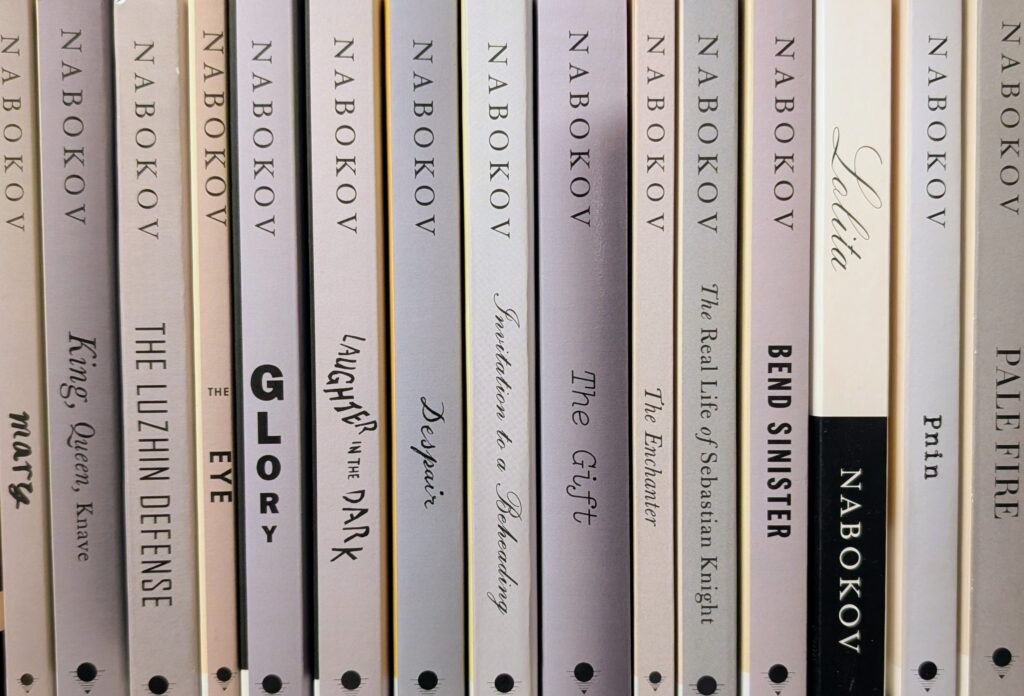
  • Despair by Vladimir Nabokov
  • The Eye by Vladimir Nabokov
  • Glory by Vladimir Nabokov
  • Invitation to a Beheading by Vladimir Nabokov
  • King, Queen, Knave by Vladimir Nabokov
  • Laughter in the Dark by Vladimir Nabokov
  • The Luzhin Defense by Vladimir Nabokov
  • Mary by Vladimir Nabokov
  • Pale Fire by Vladimir Nabokov
  • Metamorphoses by Ovid
  • The Four Agreements by Miguel Ruiz
  • The Comedy of Errors by William Shakespeare
  • Henry VI, Part 1 by William Shakespeare
  • Henry VI, Part 2 by William Shakespeare
  • Henry VI, Part 3 by William Shakespeare
  • Lucrece by William Shakespeare
  • The Taming of the Shrew by William Shakespeare
  • The Two Gentlemen of Verona by William Shakespeare
  • Venus and Adonis by William Shakespeare
  • Heidi by Johanna Spyri
  • Of Mice and Men by John Steinbeck
  • Treasure Island by Robert Louis Stevenson
  • The Adventures of Tom Sawyer by Mark Twain
  • The Undocumented Americans by Karla Cornejo Villavicencio
  • The War of the Worlds by H.G. Wells
  • Stuart Little by E.B. White

Takeaways From 2025

1) The Mouse and the Motorcycle by Beverly Cleary is just as fun to read as an adult as it is as a kid.

2) Flaubert’s Madame Bovary will be re-read, probably many times. Having never read it before, it’s fascinating to see how influential Flaubert’s masterpiece has been and remains to other authors (such as Nabokov). Plus, it’s entirely non-put-downable.

3) Always lingering in the outskirts of my mind but new to me this year, Joan Didion is exactly the vibe I imagined her to be, offering exactly the lens through which to see the world I imagined she would. Top shelf. I’m looking forward to reading everything of hers I can.

4) Having read Elmer Gantry poolside in my youth, my re-reading of it this year provided the lovely dip into reflections of the past that I had anticipated. Also, just a great read.

5) I have recommended Happy City more than any other work of nonfiction this year. For anyone even mildly interested in or curious about urban planning, the madness of urban sprawl, and how to improve the quality of life for everyone in cities, this is the book you want. And even if you’re not interested, you should read it anyway.

Longer Thoughts

I held off on publishing this list because of a compulsion to finish Vladimir Nabokov’s novel The Gift (see below), which I completed on Thursday morning. I began the book in October and felt I needed to finish it even though it obviously doesn’t count towards last year’s total. Life got in the way of my reading it (see above), but The Gift is also, by far, Nabokov’s most complex and challenging novel. At least, of the novels I’ve read.

Let me back up a little bit, though. Early in the year, I realized how silly it was that I hadn’t read everything by the one author whom I’ve adored for decades. I read a few of Nabokov’s works prior to 2025 (Glory, Lolita, Pnin, and all of his short stories repeatedly), but there was so much I hadn’t. Starting with his earliest Russian novel, Mary, I began working my way chronologically through his superb collection of émigré novels through to The Gift. And then, well, you know the rest. Of Nabokov’s fictional work, I have one short Russian novella (The Enchanter) left before moving on to his novels written after he moved to the United States, only a handful of which I haven’t already read. And then there is all of his nonfiction, including his university lectures, that I can’t wait to read!
As the year progressed, I set another goal for myself: to read all of William Shakespeare’s works. While I never enjoyed reading Shakespeare before, I’ve found myself fully, gleefully, and thankfully immersed in his plays and poetry this year. The motivation to read him wasn’t out of compulsion, though: his influence on literature is so undeniably profound that it’s almost essential to have, at a minimum, a basic grasp of his work to better appreciate and understand so much that has come after him. I’m still not a fourth of the way through his oeuvre, but this slow carriage ride over the hills and through the valleys that lie between Stratford-Upon-Avon and London is sublime.

Looking Ahead

Included in the collection of works I’d like to tackle this year are Homer’s epics (that I didn’t get to last year), the rest of The Canterbury Tales (that I didn’t finish last year), and the King James Version of The Holy Bible (that I read somewhat in childhood and youth). I’d like to read some of the major religious texts in the coming years, and I thought the Bible would be a good place to start, especially given the state of affairs in the US today. I’ll certainly finish the rest of Nabokov’s works, both fiction and nonfiction. And I’ll make more headway on Shakespeare’s plays if I don’t finish them altogether as well.

I’m also going to deep dive into Russian literature. Having that foundation will allow me to absorb Nabokov’s works much more deeply on subsequent reads. Plus, there’s just so much to explore in the sea of Russian literature, and I have only splashed around at the surface.

There are plenty of books on my shelves waiting to be read, so I shouldn’t need to wander through any bookstores, brick-and-mortar or virtual, for a few months. But when has that ever stopped me?

And that’s it! I’m looking forward to the year ahead in reading, and I hope everyone’s reading journey in 2026 is deeply satisfying!
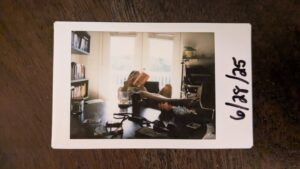
I Am Reminded of You

There are so many reasons why I adore Kari, and on a near-daily basis, she reveals another aspect of herself, almost always by accident, like an incidental turn or bump of a kaleidoscope’s wheel, her light reflecting in brilliant, dazzling new patterns, captivating me all over again. I’ve never been so entranced by another person as I have been by her. I’ve also never laughed as much with another person as I have with her.

I’d like to take you back to the beginning of our relationship and share just one of what is an endless array of moments when she grabbed my hand and pulled me deeper into this hidden forest we discovered in the spring of this year, a forest where we had both been playing hide and seek for years, unknowingly, with one another.

Some time in the very beginning of our relationship—perhaps within the first week of our dating—in the middle of a conversation and unrelated to anything being discussed, she halted me with, “You remind me of Richard Gere.”

I paused, absorbing her words, and desperately tried to not smile too widely. “Good lord, this woman is into me,”  I thought! Being compared to Richard Gere? Bona fide sex symbol of the ’80s and ’90s, leading man in Pretty Woman, An Officer and a Gentleman, and American Gigolo? No, this wasn’t lost on me. Hearing Kari say that I reminded her of this hunk of a man, my ego swelled like some absurdly huge potato that took the blue ribbon at last year’s county fair. And Gere had more than looks: he had a certain style, a certain appeal, a certain je ne sais quoi. In fact, I could list only a handful of gentlemen that she could have mentioned, and I would’ve been equally—

“Not his looks, though: his voice. You sound like Richard Gere.”

With a flat expression and as if this was all perfectly natural, she had picked out the most mundane and inconsequential of Gere’s features, sidestepped all conventional wisdom on how compliments work, and instead (and this is the important part) instinctively did this sort of Three Stooges bit, waving a compliment just over her left shoulder, and then, while I stood there wide-eyed and fascinated, jabbed me in the eyes with her right.

So you can see why I love her.

A few nights after the “compliment,” and after laughing over it once more, we pulled up an interview with Gere to see precisely what she meant about me sounding like him.

And that’s when Kari realized I did not, in fact, sound anything like Richard Gere, making the entire incident all the more funny. But it was never the point that I sounded like him. The point was that she loved my voice. And with that love, she encouraged me to read aloud to her. Some of our earliest nights together (continuing on now into our later nights together) consisted of us sitting beside one another while I read something out loud to her. The first book we read together was The Four Agreements by Don Miguel Ruiz, a fantastic guide to making the most of your life. 

Now, once a week on Sundays, we read aloud to each other. We’re currently reading The Artist’s Way by Julia Cameron together in addition to the various books we’re reading separately. I never knew this was something I wanted, but the half hour that we spend together reading is something I look forward to as each weekend comes to a close. It’s our own personal little book club.

As a final note, as I wrap this up and prepare to give her a preview of what I’ve written, I have asked her whether she wants to read it or have me read it to her. Aww. Of course she wants me to read it. She always makes me smile.

The audio version of this essay, with the author, me, narrating, is available here.

The Woman in 2B

It was early in the fall of last year when I heard noises in the apartment below mine. The previous tenant had long since moved out, and someone new was moving in, but not, from what I could tell, all at once. Every few days, I heard someone bumping around downstairs, and then nothing at all. I never saw a moving van. I never saw anyone trudging up and down to the second floor with furniture or boxes. I never saw a lamp—or anything else, for that matter—at the bottom of the stairs, waiting to be taken up. I caught a glimpse of a woman from time to time, but I was never certain that she was my new neighbor.

A couple of weeks into this, I ran into my neighbor Erica, who lives two floors down, directly beneath me. “Is someone moving in between us?” I asked. Someone was, she told me, and her name was Kari.

Almost immediately after this conversation, Kari finally settled in, and with her, her two dogs. Like Kari, her pups were hidden-away mysteries. I never saw them, but I would often hear them barking. And then I wouldn’t hear them barking. And then I would. And then I wouldn’t.  It finally registered with me that they would bark whenever Kari wasn’t home. It was kind of cute: they missed their mom, the neighbor I never saw.

MEETING

About two months after Kari moved in, it happened that she was getting into her car as I was walking to mine. Great! We’ll finally meet! This was my first studied look at her: she was warm, pretty, and smiling. We introduced ourselves, exchanged some small talk, and then, because I only knew one thing about her and my social skills are dubious at best, I said, “Well, I always know when you’re home.” 

Well done, Scott. Juuuuust super. Of course, I instantly regretted saying that because now, to Kari, the lovely young woman who lived beneath me, whom I had literally just met, I sounded as though I hated dogs or was seriously creepy. Or both. The only thing I needed to do to make the situation worse was to lick my lips while maintaining eye contact. I didn’t, though, and somehow I fudged my way through the conversation, ending it on a less awkward note. The catastrophic moment, however, would play repeatedly in my mind.

CHRISTMAS

I didn’t see Kari again except from a distance for a while. As Christmas drew nearer, I decided to get the dogs a little bag of treats to smooth away the earlier incident. Then I came home one afternoon to find a gift bag hanging on my doorknob. Inside was an assortment of chocolates, some earplugs, and a little index card signed by Kari, Hilde, and Rudy (both of the pups in their own handwriting, with backwards R’s and everything). The kids said they hoped they weren’t too loud and that the earplugs might help with the barking. It was incredibly sweet, and I felt terrible.

That night, I went to the pet store and bought Hilde and Rudy each a small toy and a bag of treats. I enclosed a little note about how I loved hearing their voices—I honestly did; they were brave protectors for their mom, handling the very serious business of keeping watch and securing their home. I quietly hung the bag on Kari’s door and snuck back upstairs.

New Year’s came and went. I didn’t see Kari again until sometime in January, and when I did catch a glimpse of her, I inadvertently ignored her, mistakenly believing she was a stranger. 

RUDY

At the end of that month, my mom was hospitalized, and on February 1st, she passed away. I was out of town just before and for several days after her passing. I bring this up because my life is incredibly routine, so for me to be away from home is highly unusual. When I returned home, I ran into Kari, walking Rudy. Unaware of why I had been away, she boldly and regrettably asked me, “How was your vacation?”

“Actually, my mom died,” I said.

Sure.I definitely could have offered a more delicate response, but the awkwardness of the situation was too great a temptation. She was mortified for asking her question, of course, but for me, it was a soothing lightheartedness I needed in that moment. I reassured her that it was perfectly fine, and it made me smile inside, sharing a moment I knew we would revisit.

At the time this was happening, though, Rudy was having absolutely none of this. “Who the hell are you, getting all up in my mom’s business? Do you not hear me barking, Stranger Danger? Let me at him, Mom!”

And then Rudy got a little free from her grip, jumped up, and scraped my hand with his teeth. Kari quickly wrangled him into her car, and while she did, I assured her he was fine; she hadn’t seen the gash, nor the copious amount of blood that was now dripping down my hand. I turned so that it was out of view when Kari returned. We talked more about my mom’s passing, and she asked if I wanted a hug. “Yes” seemed not only like the best answer, but the one I wanted to give. So we hugged.

After the hug, and because I didn’t want the moment to end, we kept talking as I continued to bleed out. She had such a lovely face. She was such a lovely person. This is a lovely place to be.

GAMES

About two months later, I ran into Erica again and she offhandedly mentioned that the neighbors (including Kari) regularly had game nights at the clubhouse. I practically pleaded to be invited. She put me on the group chat, and in April and May, I got to know my neighbors better, and, most specifically, I got to know Kari better during game nights.

At first, I sat across the table from her, certain that was close enough. Then I sat beside her. And then sometimes, Kari would text me outside of the group chat about things that had nothing to do with game nights. The first time it happened, I was confused about why she was texting me, but I was elated.

In the middle of May, Kari, Erica, Darcy (another neighbor), and I went out for pizza and trivia night at a local brewery. The next night, I had the three of them up for dinner and social hour in my place. We all laughed and played and laughed some more. Late in the evening, everyone went home.

COMING UP

Not long after, Kari started coming up to my apartment by herself to hang out. Somewhere along the way in all of this, I became thoroughly smitten. And somewhere along the way, Kari did, too. While I am almost always oblivious, surprisingly, I got the feeling that our attraction was mutual. Finally, one night, I had to tell her how I felt. I didn’t know what to say, but I had to say something.

Love is always risky, and putting your heart out for someone is more than a little nerve-wracking. It’s something I’ve largely avoided doing. With Kari, the situation was more complicated: beyond the potential heartbreak, there was the practical issue of us being neighbors. We might be in a terribly awkward jam if things didn’t work out between us.

As we sat in my apartment and I worked up the nerve to say something, Kari sensed nervous tension in me, and before I could say what I hoped to say, she went back down to her apartment to let me decompress. Completely confused, I texted her, stating that I didn’t know how to say what I wanted to say without sounding nutty, but that I had a lot of excitement in my head. She texted, “I can come up.” And then she did.

And now? Well, now I have so many lovely tales to tell, I barely know where to begin. This story with the woman in 2-B has only just begun.

END NOTES

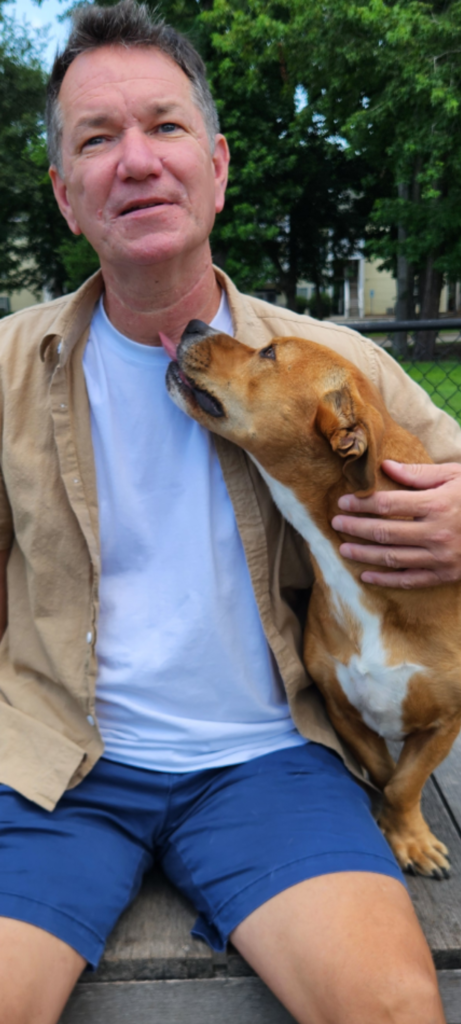
After Kari and I became an item, I showed her the scar on my hand where Rudy had brushed me with his teeth. Now, she and I go on multiple walks a day together, holding hands while Rudy and Hilde walk in front of us on leads. Last week, Rudy laid his head on my lap while Kari and I sat in an oversized chair. And both Rudy and Hilde get excited whenever I go downstairs, which, of course, is regularly. For your viewing pleasure, I have included a picture of me (left) with the best boy below.

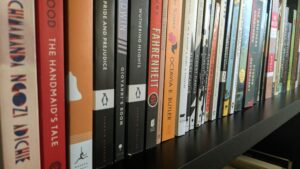
Books on a shelf

The Year in Reading, 2024

When I decided at the end of last winter to return to school and major in English, I knew that I would be reading more than usual and that I needed to start stretching my brain before classes began. Having fallen out of the habit of reading many years prior, at the end of February I decided to start reading regularly again and set a goal to read 100 books by the end of the year. I also wanted to begin working my way through the classics.

I read 84 books in 20241 and I’m pretty pleased with that number despite not reaching my goal. Had I given it more thought, I might’ve set my goal to 75 since I didn’t account for January and February already having passed when I started the challenge. Either number, though, was ambitious given that I read exactly zero books the year prior and, for many before that, the number of books I read per year was generally less than 5.

It feels good to be reading again and it’s weird that I ever stopped; I enjoyed reading in my younger days. That’s how it goes, though: you get distracted or focused on some part of life and some other part falls off. A person can only do so much. Before I moved to Costa Rica in 2013, I thought I would spend my days in some thatched-roof hut reading and writing. During the two years I lived there, though, my focus was elsewhere and I wrote little and read less. It didn’t pick up much after that. So I’m happy now that my life is back on track, at least in terms of reading.

While the vast majority of what I read this year fell mostly within something approaching the historical literary canon—or novels adjacent to it—I wasn’t tied to it, reading everything from Chimamanda Ngozi Adichie’s Americanah to Carl Sagan’s The Demon-Haunted World and many points in between. In addition to some of the classics, I read a few modern works of fiction, a handful of nonfiction books, some poetry books, a few dramas, four children’s books (two of which I had never read before), two or three books I had previously read, and a YA novel that popped up on my radar this fall. There were four or five books I read more than once this year and numerous short stories within collections that I read repeatedly.

Now that I’ve started reading again, I’m more excited than embarrassed by how little I’ve read over the years because there are so many books waiting for me! I do have concerns about my timeline, though. Assuming I read 100 books a year, if I’m lucky, I’ll only get to read a few thousand more before I’m below ground. But I likely won’t read 100 a year going forward because I’m not a particularly fast reader and, more importantly, there are so many other aspects of life I want to also focus on like music, writing, photography, school, and so on. There simply is not enough time. And this is all assuming that I remain single with no time commitments to someone else. And honestly, being single is not how I want to spend my days. I’ve never wanted to be single. But, here I am.

I think, then, that 75 seems like a reasonable number of books to read in a year. 75 print books. I don’t know if I’ll ever listen to audiobooks. I know people swear by them but they just aren’t appealing to me.

At any given moment now, roughly 20-25 books sit on shelves and various flat surfaces around my apartment, waiting to be read. On digital shelves, hundreds more sit waiting to be purchased. It makes me happy knowing—at least to some extent—what I have to look forward to in the months and years to come. And I’m thrilled to have found new works and new authors that have moved me in ways I forgot were possible; I’m grateful for their influence.

Takeaways From 2024

  1. I’ve yet to find an author who can touch Nabokov stylistically. I’ll keep searching but I’m fine with re-reading Nabokov. Over and over. And over.
  2. Anthony Doerr’s writing is beautiful. All the Light We Cannot See is a gorgeous tale, rich in imagery.
  3. Miles Morales: Spider-Man by Jason Reynolds gave me a lot of hope in terms of what type of writing is reaching young kids today; the book does an excellent job of drawing attention to the school-to-prison pipeline that exists within the black community.
  4. Two authors I’m upset with: Oscar Wilde and J.D. Salinger. Having only read them for the first time this year—and instantly falling in love with both—I can’t believe they left this world having published so little. Not cool, guys.
  5. Had you, at any point in my life, told me that one of the most moving stories I would ever read would be about two Catholic bishops in the American Southwest set in the mid-1800s, I would’ve assumed you were joking because nothing in that description is even slightly interesting to me. And yet. . . I bawled like a baby reading Willa Cather’s Death Comes for the Archbishop and am getting choked up just thinking about it now.

What I Read

Below is a list of most of the books I read in 2024, alphabetized by author/editor last name, excluding textbooks for school. My favorites (that weren’t re-reads) are highlighted. If you have reading suggestions or just want to talk books, by all means, message me. Have fun reading in 2025!

  • The Hitchhiker’s Guide to the Galaxy by Douglas Adams
  • Americanah by Chimamanda Ngozi Adichie
  • How to Read a Book: The Classic Guide to Intelligent Reading by Mortimer J. Adler
  • The Handmaid’s Tale by Margaret Atwood
  • Giovanni’s Room by James Baldwin
  • The Fire Next Time by James Baldwin
  • Fahrenheit 451 by Ray Bradbury
  • The Tradition by Jericho Brown
  • Parable of the Sower by Octavia E. Butler
  • If on a winter’s night a traveler by Italo Calvino
  • The Fall by Albert Camus
  • The Myth of Sisyphus by Albert Camus
  • The Plague by Albert Camus
  • The Stranger by Albert Camus
  • Ron Carlson Writes a Story: Tips from a Master of the Craft by Ron Carlson
  • Alice in Wonderland by Lewis Carroll
  • Through the Looking-glass and What Alice Found There by Lewis Carroll
  • Death Comes for the Archbishop by Willa Cather
  • Selected Stories of Anton Chekhov by Anton Chekhov
  • Tesla: Man Out of Time by Margaret Cheney
  • Heart of Darkness by Joseph Conrad
  • Do Androids Dream of Electric Sheep? by Philip K. Dick
  • All the Light We Cannot See by Anthony Doerr
  • The Hidden Messages in Water by Masaru Emoto
  • Rhetorical Criticism: Exploration and Practice by Sonja K. Foss
  • The Art of Fiction: Notes on Craft for Young Writers by John Gardner
  • Neuromancer by William Gibson
  • The Wind in the Willows by Kenneth Grahame
  • The Grand Design by Stephen Hawking
  • The Old Man and the Sea by Ernest Hemingway
  • The Cambridge Companion to Narrative by David Herman
  • Brave New World by Aldous Huxley
  • The Legend of Sleepy Hollow and Other Stories: Or, The Sketch Book of Geoffrey Crayon, Gent. by Washington Irving
  • Dubliners by James Joyce
  • The Complete Stories by Franz Kafka
  • Demon Copperhead by Barbara Kingsolver
  • Metaphor: A Practical Introduction, 2nd Edition by Zoltan Kovecses
  • Metaphors We Live By by George Lakoff
  • Method and Madness: The Making of a Story by Alice LaPlante
  • One Hundred Years of Solitude by Gabriel García Márquez
  • Kafka on the Shore by Haruki Murakami
  • Pnin by Vladimir Nabokov
  • Great Exodus, Great Wall, Great Party by Chessy Normile
  • The Complete Stories by Flannery O’Connor
  • 1984 by George Orwell
  • Animal Farm by George Orwell
  • The Tom Patterson Years by Tom Patterson
  • The Selected Works of Edgar Allan Poe by Edgar Allan Poe
  • Good Omens: The Nice and Accurate Prophecies of Agnes Nutter, Witch by Terry Pratchett
  • Nightingale by Paisley Rekdal
  • Miles Morales: Spider-Man by Jason Reynolds
  • The Vampire Lestat by Anne Rice
  • The Demon-Haunted World: Science as a Candle in the Dark by Carl Sagan
  • The Little Prince by Antoine de Saint-Exupéry
  • Franny and Zooey by J.D. Salinger
  • Nine Stories by J.D. Salinger
  • The Catcher in the Rye by J.D. Salinger
  • Titus Andronicus by William Shakespeare
  • Frankenstein by Mary Wollstonecraft Shelley
  • Death and the King’s Horseman by Wole Soyinka
  • The Strange Case of Dr. Jekyll and Mr. Hyde by Robert Louis Stevenson
  • Dracula by Bram Stoker
  • Gulliver’s Travels by Jonathan Swift
  • Humorous Stories and Sketches by Mark Twain
  • The Adventures of Huckleberry Finn by Mark Twain
  • Twenty Thousand Leagues Under the Seas by Jules Verne
  • Breakfast of Champions by Kurt Vonnegut Jr.
  • Slaughterhouse-Five by Kurt Vonnegut Jr.
  • The Sirens of Titan by Kurt Vonnegut Jr.
  • The Invisible Man by H.G. Wells
  • The Time Machine by H.G. Wells
  • The Importance of Being Earnest by Oscar Wilde
  • The Picture of Dorian Gray by Oscar Wilde
  • The Scribner Anthology of Contemporary Short Fiction by Lex Williford
  • Mrs. Dalloway by Virginia Woolf
  1. 84 books came out to roughly 24,000 pages. Which is a much larger number than 0. Yes! ↩︎
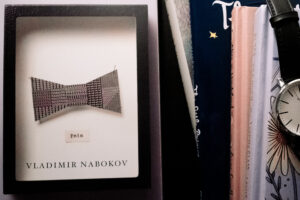
Pnin by Vladimir Nabokov

Nabokov’s Pnin and Peter Sellers

This fall, I read Vladimir Nabokov’s Pnin1 for the first time, having read Lolita for the first time decades ago. I mention this timeline because, while it took me nearly 40 years to get to Pnin, Nabokov went to work immediately on the novel while still wrapping up Lolita. More precisely, Nabokov originally wrote and published parts of Pnin as a series of short stories in The New Yorker immediately after writing Lolita and while shopping around for a publisher. Finding a publisher was such a taxing effort that, in a letter to one of his friends, Nabokov wrote that Pnin provided him with a “brief sunny escape from [Lolita’s] intolerable spell.”

I regret discovering only recently the joy of Pnin. Just as writing Pnin was a sunny escape for Nabokov, reading it became one for me, transporting me back to a childhood filled with the deadpan comedy of Peter Sellers. When I made the connection of Nabokov’s protagonist, Timofey Pnin, to Sellers—which happened almost instantly, somewhere between Pnin’s modesty while living in a squalid apartment in the Sixteenth Arrondissement of Paris and when it was revealed he was on the wrong train—I realized what an incredible opportunity was missed in the early 1960s. Just imagine:

Coming Soon! Pnin, the new Blake Edwards film starring Peter Sellers as Timofey Pnin featuring an original soundtrack by Henry Mancini!

Peter Sellers would’ve so masterfully captured the nuance in Timofey Pnin’s comedic awkwardness, neuroticism, and pensiveness. Characters as memorable as Hrundi V. Bakshi in The Party and the forever bumbling Inspector Clouseau in the Pink Panther films were definitively Pninian. It’s like a hole in my heart, realizing that this film will only ever live in my imagination. I want to believe that a copy exists—that it was somehow produced in secret with a final cut making it onto film, only to be tragically lost one evening, falling behind a bureau in some movie mogul’s posh mid-century home in the hills. I really want to believe. Because it’s just too perfect a movie not to have been made. (Are we sure we’ve checked everywhere?)

What makes this hole even more pronounced is that Peter Sellers played Clare Quilty in Stanley Kubrik’s 1962 production of Lolita (and then as the three leads in his 1964 film, Dr. Strangelove or: How I Learned to Stop Worrying and Love the Bomb). To have released a studio production of Pnin right around the same time would’ve been an epic moment in the history of filmmaking. Given that Nabokov, Kubrick, Sellers, and Edwards all existed within the zeitgeist of the period, I’m surprised it didn’t happen.

So again, if everyone up in Hollywood Hills could just take a little look-see behind their furniture, that would be great. But if we don’t find it, no worries. My imagination will be showing a private screening every time I re-read Nabokov’s Pnin. I’m not unhappy about this; it is, after all, previously unreleased Sellers.

Vladimir Nabokov
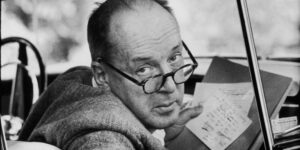
Vladimir Nabokov. Photo Credit: Carl Mydans, Life Magazine © 1959

  1. According to Nabokov, pronounced “up Nina” except the u and the a are silent ↩︎
Map of the East Indies by J. H. Colton (Geographicus Rare Antique Maps)

Indonesia and a Noble Beast

The mismanagement of plastic waste in Indonesia, the world’s fourth most populous country and second largest polluter, is, at its core, a global crisis. The Indonesian government, the World Bank, the United Nations Environment Programme, and an untold number of non-governmental organizations have worked tirelessly for years, investing countless resources, to develop and implement strategies to both manage and reduce waste in the archipelagic country. To date, significant progress has been made and the government is to be lauded for their efforts. Still, much work remains. Fortunately for Indonesia, the problem of plastic marine waste was on the list of available topics for a solution proposal essay due in my class on rhetoric.

Despite being completely unaware of the issue just over a week ago, while pouring over various reports and documents Tuesday evening, I had an epiphany between my first and second snacks of the night and developed a simple plan to solve the problem entirely. (“You know what? I think we’re done with the carrot. It’s time for the stick.”) I must say, I’m very excited for the people of Indonesia. I only wish—and I’m sure others will feel similarly—I had been presented with the problem earlier. Shortly after midnight last night, I submitted the assignment, watched some Project Runway, and went to bed.

At 8:09 this morning, I got out of bed. I then made coffee, logged into school, and downloaded the final assignment for another English class. After closing the school-related tabs from my browser, I stared blankly at the page that had been open for weeks displaying my earlier search results for the term “noble beast”.

Sigh. Let’s go back.

At 8:09 this morning, I got out of bed. Throwing back the covers, I stretched my feet down to the floor to begin my morning routine. I shuffled my way to the bathroom and as I caught myself in the mirror, I turned to the right and gazed over my left shoulder at my reflected self. I shimmied my pajama pants down a couple of inches and, with my right hand, raised my t-shirt to my chest. I slowly slid my left hand down the increasingly elliptical shape of my belly that has been moving outward away from my frame as subtly as continental drift.

I ran my hand down the curve once more and when it reached the squishy base, I drew my fingers back along the newly developed crease, out toward the sides, and back along my hips. With the tips of my fingers, I gave the rounded flesh a little flip and a tap, a slap and a jiggle, and then, grabbing a handful of flab, lifted it up before letting it bounce back to its natural state. “Oof.”

I pulled back my shoulders, sucked in my stomach, and took in this new and better version of myself. “Ah. Okay. That’s much better.”

“Designers, you are safe. You can leave the runway.”

Eye contact in the mirror: “You are a noble beast,” and showing great restraint, I managed to keep my finger guns holstered. With the coffee made, the assignment downloaded, and the school tabs closed, I re-read the search results for “noble beast.” I needed confirmation that I hadn’t forgotten what it meant and also that its etymology and usage weren’t problematic.

The term ‘noble beast’ is used to describe a tiger because it kills its prey for hunger, rather than for pleasure like other wild animals.

Deflated, I let the air out of my fattened cheeks. There had been nothing noble about the way I killed off that box of Pop-Tarts earlier in the week.

“I really need to change my diet and start exercising again,” I tell myself. “I have got to get serious. But it is a little too late in the morning now to exercise. Tomorrow really is a better day to start back. Definitely better. I’ve got a lot to do today. I need to put up my holiday decorations. I also need to find out who I need to talk to in Indonesia. Man, they are gonna be so happy!”

And so begins another day.

Nine Stories by Salinger

Salinger And the Lovecats

This summer during introductions in an English lit class, a fellow student suggested that I read J.D. Salinger’s Nine Stories as a primer for the author.

As I sat reading the last of the short stories in his collection (in a gently-used first edition paperback printed in the summer of 1954), the lyricism of one particular line stood out, emphasized in bold below:

Teddy turned around at the waist, without changing the vigilant position of his feet on the Gladstone, and gave his father a look of inquiry, whole and pure. His eyes, which were pale brown in color, and not at all large, were slightly crossed—the left eye more than the right. They were not crossed enough to be disfiguring, or even to be necessarily noticeable at first glance. They were crossed just enough to be mentioned, and only in context with the fact that one might have thought long and seriously before wishing them straighter, or deeper or browner, or wider set. His face, just as it was, carried the impact, however oblique and slow-travelling of real beauty.

-J.D. Salinger, Teddy

Straighter or deeper or browner or wider. Straighter or deeper or browner or wider. What is that?!

I was singing it softly to myself, in a familiar rhythm that bobbed up and down on the surface of my mind. Then I had it: The Lovecats by the Cure.

I googled the lyrics.

We slip through the streets
While everyone sleeps,
Getting bigger and sleeker
And wider and brighter

-The Cure, The Lovecats

Fascinating. I pondered whether Salinger’s lyricism influenced Robert Smith when he wrote the song or whether my love for the song and it’s lyricism had influenced the way my mind read over Salinger’s words. As I considered this I scrolled down on my phone, just past the lyrics, and immediately wished I hadn’t. Listed there were the questions People also ask generated automatically by Google: “Who sang Love Cats in the 80s” followed by “Who wrote Love Cats?”

Once more, I am confronted with reality of growing older: that, at an alarming rate, the number of people younger than me is continuously increasing. That three generations now live and breathe behind me and that more are coming. And that, while in my sea of memories The Lovecats crests so dramatically on these shimmering blue waters, the swell is so distant from the shore that a curious young Teddy standing on the beach staring at that sea today would have to search the horizon to find it.

I will contentedly confess, though, that while you were busy reading, I did set back out on those waters with my stereo turned up, remembering my youth as it was: the grooviest thing, the perfect dream, when we were all so wonderfully, wonderfully pretty.

It is lovely out here.

Nine Stories by Salinger

Doing Things

It’s been two and one-half months since I arrived here. Today was the first day that I went to the beach.

Today was also the first day I picked up food from a local seafood restaurant. The food from Seaview Crab Company was delicious. (Dining inside wasn’t going to happen.)

It’s amazing that it’s taken me this long to enjoy two of the things I was so excited about when I decided to move here: lounging on the beach and having access to fresh seafood restaurants. Two of the more significant items on my list under the heading of “living a coastal life.”

When I was on the beach today, I was laying on my towel, taking a break from reading, and my mind wandered to some minor and some not so minor annoyances in my life. And I reached the inevitable conclusion that, “All of my life choices have led me here.”

And then I drifted out of my mind back to the towel and the sand and the beach and the ocean and the waves and the seagulls flying around and I thought: “All of my life choices have led me here. This is fine.”

Back to School

Hi all,
My name is Scott and I recently moved to Wilmington, North Carolina to embark on a new path in life. After getting a degree in mathematics in my youth and spending the fifteen years that followed corporate ladder-climbing in tech, I eventually burned out and pursued a more relaxing career in photography. (Creative endeavors are my passion.) Since 2016, I have occasionally driven for Uber both for added income and for the social aspect. When I realized I had driven enough to earn free tuition at ASU, I decided to pursue a degree in English.

As for professional goals, I have none in particular. I’d honestly be happy working in the basement of a library managing their microfiche department provided my coworkers were pleasant enough and, maybe from time to time, celebrated someone’s birthday with cake. I’m most interested in being intellectually challenged and improving my writing skills.

And this would be my first university writing assignment, due for my orientation class at Arizona State University which I completed this week. I received full points/credit for my work so, “Yay, me!” Since there may be some information in here that you’re unfamiliar with or that may be of interest to you, allow me to deconstruct this 150 word submission.

Becoming a Sun Devil

In less than a month, I begin the first of my classes at Arizona State University on my way to earning a Bachelor of Arts in English and I couldn’t be more excited! Three months ago, the idea of going back to school wasn’t anywhere near the “things to do with my life” list. I had definite plans to change my geography and theoretical plans to change careers but nowhere on the horizon were plans to go back to school. And then, having all but abandoned photography and doing nothing more than taxiing people from one destination to another, something happened: I hit a notable milestone. Over the course of seven or so years of driving off and on for Uber, I had made 2,000 trips. “Neat,” I thought. And also, “Oh, that’s terribly sad.”

When I looked at the Uber app on my phone, I realized that having made 2,000 trips, I now qualified for a free education from Arizona State University Online. I had noticed previously that it was an available benefit once you hit that milestone but I didn’t take it seriously because, well, it’s an online education. And then I realized my thinking might be stale.

Wait, so You’ve Been Driving for Uber?

Yeah. So I started driving for Uber in 2016 in Miami. After leaving the corporate world in 2007 and pursuing photography, I realized that I could live somewhat minimally, just working any sort of job and do whatever I wanted to do creatively. So I drove for Uber for a while in Miami and then in Tampa in 2017. I didn’t drive for Uber again until the spring of 2023. I had driven for DoorDash for the three years prior but I really just didn’t enjoy it. Plus, I was so absurdly isolated (intentionally so) that I needed some sort of socialization. That was really my final push to start driving for Uber again.

Moving On

It’s hard to grasp, I think especially for someone born into the world today, how drastically life has changed since the introduction of the internet. In a period of barely over a quarter of a century, in far less time than the average lifespan, nearly every major aspect of our lives has not just been affected but drastically altered by the digital world. I saw someone posit the question recently, “How did people even work before computers and cell phones? Like what did they do at their desk?”

Dating, working, learning, banking, shopping, handling private and governmental business, and even simply communicating have all been touched by the advent of the internet. And the integration of technology and the online world into our daily lives has even altered the way we interact with each other in the real world. Phone call? Ew. No thank you. A period at the end of that closing sentence on a text? Aggressive much? (1998 me asking, “What’s a text?”)

Anecdotal Evidence

Exhibit A: My first job out of college (my second run*) in 1995 was working for a software company that stayed pretty on top of changes in the tech industry. Not quite the bleeding edge but definitely the cutting edge. In my second year there, when a coworker and I found out that our boss and his girlfriend had met online, we were flabbergasted but then immediately agreed that it made perfect sense because he had just the right level of dorkiness to use an online dating service. It was just such an odd thing to do then. Just a few years later in 2003, I remember picking every weed in the garden of online love that was match.com after my wife and I separated. Today, window-shopping romantic interests (whether a long-term commitment or a short-term fling) via scrolling through profiles on any one of a mountain of dating apps on your phone is as noneventful as scrolling through memes. (2005 me asking, “What’s an app? You mean like Snake? I LOVE SNAKE!!!!“)

Exhibit B: Toward the end of the 90s, I hit a high water mark in my professional career, working for a different software company in Newton, Massachusetts: an upper management position in a corner office with large plate-glass windows overlooking the Charles River. Great salary, stock options, the whole nine. But those windows… I can still feel the serenity of it all when it snowed. It was a job I absolutely loved and it was so completely satisfying on a professional level. In late 2001, familial circumstances demanded that I return to South Carolina and I was thankfully able to convince my employer to allow me to work from home. Working remotely at that time wasn’t unheard of but it was almost a complete anomaly. Sure, some people were doing it, but they were few and far between. Skype didn’t even exist let alone Zoom. The meetings I sat in on taking place in Newton were literally speakerphone conference calls. There was no video feed. I honestly don’t even know how I accomplished any amount of work.

Over the 20+ years that followed, working online or remotely became far more common. So much so that following the pandemic of 2020, there was a tremendous backlash of remote workers not wanting to return to the office. (2002 me asking, “What’s Skype?”)

Exhibit C: I remember when NetBank became a thing in 1998 – coincidentally, they bought out one of the companies I had worked for – and the idea of online banking seemed utterly ridiculous and stupidly inconvenient. That wasn’t a service any “respectable” bank offered. Why should I trust my money to a literal website that popped up during the dot com craze? After moving to Massachusetts, I remember seeing a local bank that offered online services and thinking that it seemed way too risky. Imagine opening up an account with a bank today that doesn’t offer online services. That’s a hard pass. (1995 me asking: “What’s online banking?”)

Exhibit D: In 1989, the University of Phoenix established a presence on CompuServe. Three years later, they became one of the first universities to offer an online education. At that point in time, it was such a novelty that it was a rare individual who took such an offering seriously. In 1998, New York University created an online subsidiary, NYU Online. This was over a quarter of a century ago. In 2010, Arizona State University began offering full degrees online. (1985 me along with every GenZ’er asking: “What’s a CompuServe?”)

Today, both MIT and Stanford offer free online classes. And in 2022, more than half of all college students took at least one class online.[1] While it’s been shown to not necessarily be a great model for early learners, for older and more mature students, it’s widely recognized as a perfectly acceptable learning environment.

In Defense of an Online Education

For asynchronous learning, the same course material is taught by the same professors. The technology exists and, as with every other industry touched by tech, is continually refined to make the online learning experience better. The capabilities for having one-on-one time with faculty are in place. Sure, there’s some level of the college experience that you lose in a virtual setting but I’ve already had the college experience. And not just once. Not even twice.* Apparently, three times as there was a whole episode in my life I have completely forgotten about!

And here we’ll quickly detour into a fun, side story:

As part of the application process to Arizona State University, they requested that I have my transcripts sent over from the University of South Carolina. After receiving and processing them, I received a notification that they would then like my records from some place called CPCC.

And I think, “I’m sorry, what? CPCC? That has to be Central Piedmont Community College in Charlotte. But I didn’t go there, did I? No, of course not. There must be some mistake. I mean, it is located in Charlotte and I did live there in between my first and second run at college. But I didn’t go there, did I? I would have some memory of that. No, this has to be a mistake. There’s no way. Right?”

I was completely baffled. I knew roughly where the campus was located; I could vaguely visualize it in my mind but that was it. There must have been some mistake in the records. I called Arizona State University to find out what was going on and they mentioned that my transcripts from USC indicated I had attended Central Piedmont. Dumbfounded, I tried even harder to dig up any memory I could about going to school there and was coming up empty. Absolutely nothing in my mind. How could this be?

I then called the registrar’s office at CPCC and they, much to my surprise, confirmed that I had been a student there (during the timeframe in which I lived in Charlotte) and were able to list some classes I had taken which made perfect sense (such as Turbo Pascal.)

Zero recollection. Zero. Zip. Nothing. Nada. I couldn’t picture a single classroom, not a single professor, not a parking lot, not a vending machine, not a single commute that I must have done repeatedly, not even one single solitary classmate. Just nothing. And I still can’t! Utterly bizarre.

So that phrase “I’ve forgotten more than you know” that older people will sometimes say jokingly to younger people? Yeah. Apparently, if you live long enough, you can say this to yourself.

Anyway, back to the point. I was talking to a young fellow in my car the other day and he mentioned that he was in school and then immediately qualified it with “but it’s online.” When I mentioned to someone close to me (both emotionally and chronologically) that getting a free online education was an option for me now, they laughed at the idea of an online degree.

Today’s view of online education is the same view as the mid-90s view of online dating. Even ASU notes to prospective students that their diplomas don’t explicitly state whether you earn your degree online or in person. So there’s definitely still some stigma with it although it’s quickly evaporating. That I feel compelled to bring some defense to it here, I think, is probably unnecessary and will likely seem ludicrous in another ten years. However, this is the current state of affairs in the Year of our Lord 2024.

Making a Better Me

All of this said, I don’t think I can adequately express how excited I am about going back to school to get a degree in English. It feels so appropriate at this stage in my life. As I stated in my orientation essay, my interests in going back to school are twofold: to be intellectually stimulated and to become a better writer. And I think both goals will serve me well along whatever paths open before me and whichever ones I choose to follow.

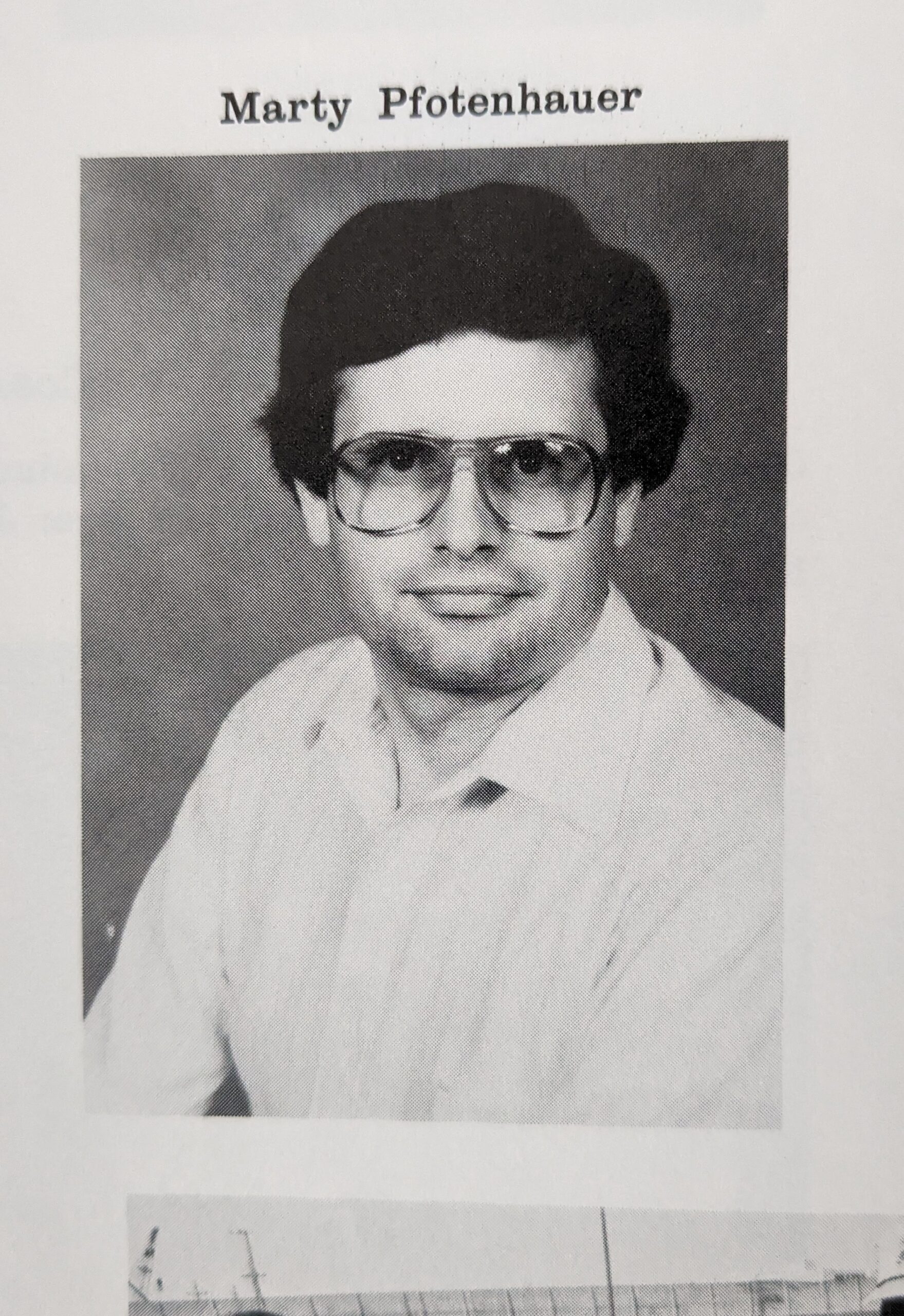
Lastly, as I begin this new adventure, I’d like to reflect back on what my eighth grade social studies teacher, Marty Pfotenhauer, taught me and the rest of our class on what I can only perceive now as a particularly exasperating day for him and that is this: you get out of life exactly what you put into it – garbage in, garbage out. So while I undoubtedly, one-hundred percent gave Mr. Pfotenhauer nothing but hot garbage one fine day in my youth, I’m one-hundred percent going to give ASU my absolute best. Which is not hot garbage. Here’s looking at you, Marty!

Forks up, Devils!!

* My first run at USC, I majored in music with an emphasis on classical piano. I dipped out for a while and did other things (ran off to California with my future ex-wife, got married in Vegas, had a kid, served in the military, and apparently attended community college before having one more cool kid). When I finally returned to USC, I pursued and received a BS in Mathematics.