Category Archives: Literature

The Year in Reading, 2025

Last January, I set my reading goal for the year to 75 books, 25 less than the year prior, to give myself a little room. When I predicted at that time that the goal was easily attainable as long as I stayed single, I had no idea how precisely right I would be: Kari and I started dating in the spring of 2025, and by the end of the year, I had read only 53 books. To really drive the point home: from the time Kari and I had our first date in May through to the end of the year, I read exactly 14 books.

I have zero regrets, naturally. It was a very, very small price to pay. And I thoroughly enjoyed almost everything I read in 2025. With that said, here is…

What I Read

I started the year with what is now an annual tradition: reading Herman Hesse’s Siddhartha, a tale that follows the life of Siddhartha, the son of a Brahmin in colonial India. Despite being written over a hundred years ago and set in a foreign, inaccessible time and place, Siddhartha is inspirational, poignant, and immensely relatable. As an added bonus, it’s a quick read at just over 100 pages. I can’t think of a better way to cleanse the palate for a new year.

Below is the full list of books read in 2025 (excluding school textbooks), alphabetized by author/editor last name. I’ve highlighted my favorites.

  • Pride and Prejudice by Jane Austen
  • The Modern Myths by Philip Ball
  • Flaubert’s Parrot by Julian Barnes
  • Notes from No Man’s Land: American Essays by Eula Biss
  • Wuthering Heights by Emily Brontë
  • Naked Lunch by William S. Burroughs
  • Writing Fiction: A Guide to Narrative Craft by Janet Burroway
  • The Artist’s Way by Julia Cameron
  • The Mouse and The Motorcycle by Beverly Cleary
  • Robinson Crusoe by Daniel Defoe
  • Slouching Towards Bethlehem by Joan Didion
  • A Study in Scarlet by Arthur Conan Doyle
  • James by Percival Everett
  • To Your Scattered Bodies Go by Philip José Farmer
  • (x2) The Sound and the Fury by William Faulkner
  • The Great Gatsby by F. Scott Fitzgerald
  • Madame Bovary by Gustave Flaubert
  • Mythology by Edith Hamilton
  • Siddhartha by Herman Hesse
  • How to Be an Antiracist by Ibram X. Kendi
  • The Jungle Book by Rudyard Kipling
  • To Kill a Mockingbird by Harper Lee
  • The Secret History of Wonder Woman by Jill Lepore
  • Elmer Gantry by Sinclair Lewis
  • One Hundred Years of Solitude by Gabriel García Márquez
  • The Sum of Us by Heather McGhee
  • Happy City by Charles Montgomery
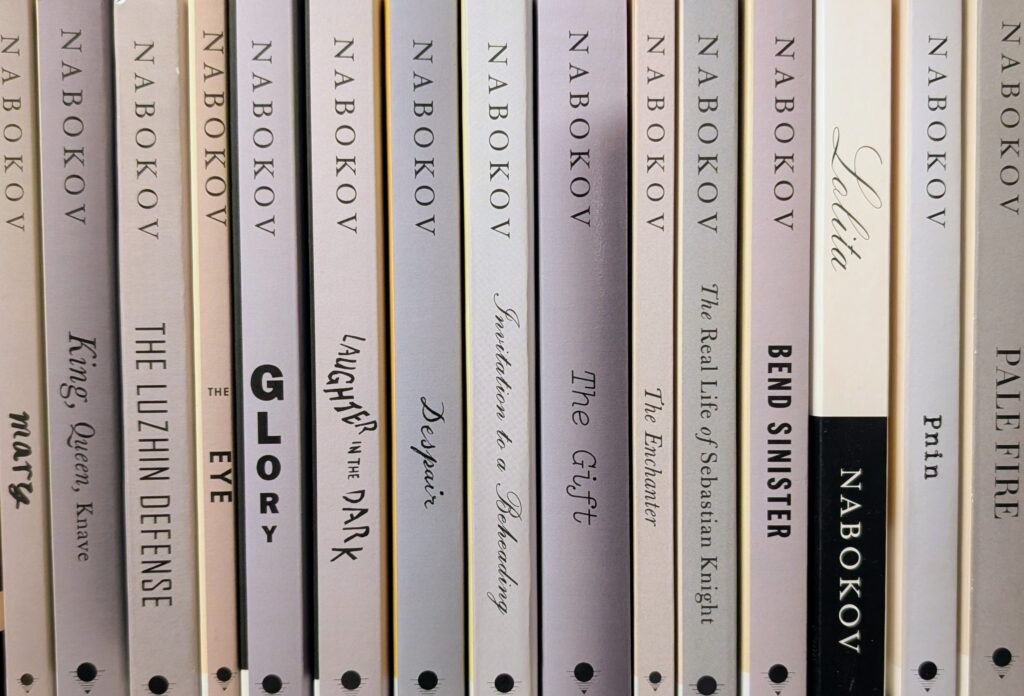
  • Despair by Vladimir Nabokov
  • The Eye by Vladimir Nabokov
  • Glory by Vladimir Nabokov
  • Invitation to a Beheading by Vladimir Nabokov
  • King, Queen, Knave by Vladimir Nabokov
  • Laughter in the Dark by Vladimir Nabokov
  • The Luzhin Defense by Vladimir Nabokov
  • Mary by Vladimir Nabokov
  • Pale Fire by Vladimir Nabokov
  • Metamorphoses by Ovid
  • The Four Agreements by Miguel Ruiz
  • The Comedy of Errors by William Shakespeare
  • Henry VI, Part 1 by William Shakespeare
  • Henry VI, Part 2 by William Shakespeare
  • Henry VI, Part 3 by William Shakespeare
  • Lucrece by William Shakespeare
  • The Taming of the Shrew by William Shakespeare
  • The Two Gentlemen of Verona by William Shakespeare
  • Venus and Adonis by William Shakespeare
  • Heidi by Johanna Spyri
  • Of Mice and Men by John Steinbeck
  • Treasure Island by Robert Louis Stevenson
  • The Adventures of Tom Sawyer by Mark Twain
  • The Undocumented Americans by Karla Cornejo Villavicencio
  • The War of the Worlds by H.G. Wells
  • Stuart Little by E.B. White

Takeaways From 2025

1) The Mouse and the Motorcycle by Beverly Cleary is just as fun to read as an adult as it is as a kid.

2) Flaubert’s Madame Bovary will be re-read, probably many times. Having never read it before, it’s fascinating to see how influential Flaubert’s masterpiece has been and remains to other authors (such as Nabokov). Plus, it’s entirely non-put-downable.

3) Always lingering in the outskirts of my mind but new to me this year, Joan Didion is exactly the vibe I imagined her to be, offering exactly the lens through which to see the world I imagined she would. Top shelf. I’m looking forward to reading everything of hers I can.

4) Having read Elmer Gantry poolside in my youth, my re-reading of it this year provided the lovely dip into reflections of the past that I had anticipated. Also, just a great read.

5) I have recommended Happy City more than any other work of nonfiction this year. For anyone even mildly interested in or curious about urban planning, the madness of urban sprawl, and how to improve the quality of life for everyone in cities, this is the book you want. And even if you’re not interested, you should read it anyway.

Longer Thoughts

I held off on publishing this list because of a compulsion to finish Vladimir Nabokov’s novel The Gift (see below), which I completed on Thursday morning. I began the book in October and felt I needed to finish it even though it obviously doesn’t count towards last year’s total. Life got in the way of my reading it (see above), but The Gift is also, by far, Nabokov’s most complex and challenging novel. At least, of the novels I’ve read.

Let me back up a little bit, though. Early in the year, I realized how silly it was that I hadn’t read everything by the one author whom I’ve adored for decades. I read a few of Nabokov’s works prior to 2025 (Glory, Lolita, Pnin, and all of his short stories repeatedly), but there was so much I hadn’t. Starting with his earliest Russian novel, Mary, I began working my way chronologically through his superb collection of émigré novels through to The Gift. And then, well, you know the rest. Of Nabokov’s fictional work, I have one short Russian novella (The Enchanter) left before moving on to his novels written after he moved to the United States, only a handful of which I haven’t already read. And then there is all of his nonfiction, including his university lectures, that I can’t wait to read!
As the year progressed, I set another goal for myself: to read all of William Shakespeare’s works. While I never enjoyed reading Shakespeare before, I’ve found myself fully, gleefully, and thankfully immersed in his plays and poetry this year. The motivation to read him wasn’t out of compulsion, though: his influence on literature is so undeniably profound that it’s almost essential to have, at a minimum, a basic grasp of his work to better appreciate and understand so much that has come after him. I’m still not a fourth of the way through his oeuvre, but this slow carriage ride over the hills and through the valleys that lie between Stratford-Upon-Avon and London is sublime.

Looking Ahead

Included in the collection of works I’d like to tackle this year are Homer’s epics (that I didn’t get to last year), the rest of The Canterbury Tales (that I didn’t finish last year), and the King James Version of The Holy Bible (that I read somewhat in childhood and youth). I’d like to read some of the major religious texts in the coming years, and I thought the Bible would be a good place to start, especially given the state of affairs in the US today. I’ll certainly finish the rest of Nabokov’s works, both fiction and nonfiction. And I’ll make more headway on Shakespeare’s plays if I don’t finish them altogether as well.

I’m also going to deep dive into Russian literature. Having that foundation will allow me to absorb Nabokov’s works much more deeply on subsequent reads. Plus, there’s just so much to explore in the sea of Russian literature, and I have only splashed around at the surface.

There are plenty of books on my shelves waiting to be read, so I shouldn’t need to wander through any bookstores, brick-and-mortar or virtual, for a few months. But when has that ever stopped me?

And that’s it! I’m looking forward to the year ahead in reading, and I hope everyone’s reading journey in 2026 is deeply satisfying!
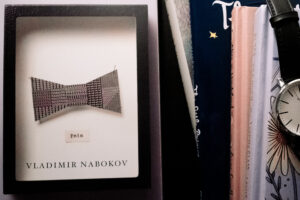
Books on a shelf

The Year in Reading, 2024

When I decided at the end of last winter to return to school and major in English, I knew that I would be reading more than usual and that I needed to start stretching my brain before classes began. Having fallen out of the habit of reading many years prior, at the end of February I decided to start reading regularly again and set a goal to read 100 books by the end of the year. I also wanted to begin working my way through the classics.

I read 84 books in 20241 and I’m pretty pleased with that number despite not reaching my goal. Had I given it more thought, I might’ve set my goal to 75 since I didn’t account for January and February already having passed when I started the challenge. Either number, though, was ambitious given that I read exactly zero books the year prior and, for many before that, the number of books I read per year was generally less than 5.

It feels good to be reading again and it’s weird that I ever stopped; I enjoyed reading in my younger days. That’s how it goes, though: you get distracted or focused on some part of life and some other part falls off. A person can only do so much. Before I moved to Costa Rica in 2013, I thought I would spend my days in some thatched-roof hut reading and writing. During the two years I lived there, though, my focus was elsewhere and I wrote little and read less. It didn’t pick up much after that. So I’m happy now that my life is back on track, at least in terms of reading.

While the vast majority of what I read this year fell mostly within something approaching the historical literary canon—or novels adjacent to it—I wasn’t tied to it, reading everything from Chimamanda Ngozi Adichie’s Americanah to Carl Sagan’s The Demon-Haunted World and many points in between. In addition to some of the classics, I read a few modern works of fiction, a handful of nonfiction books, some poetry books, a few dramas, four children’s books (two of which I had never read before), two or three books I had previously read, and a YA novel that popped up on my radar this fall. There were four or five books I read more than once this year and numerous short stories within collections that I read repeatedly.

Now that I’ve started reading again, I’m more excited than embarrassed by how little I’ve read over the years because there are so many books waiting for me! I do have concerns about my timeline, though. Assuming I read 100 books a year, if I’m lucky, I’ll only get to read a few thousand more before I’m below ground. But I likely won’t read 100 a year going forward because I’m not a particularly fast reader and, more importantly, there are so many other aspects of life I want to also focus on like music, writing, photography, school, and so on. There simply is not enough time. And this is all assuming that I remain single with no time commitments to someone else. And honestly, being single is not how I want to spend my days. I’ve never wanted to be single. But, here I am.

I think, then, that 75 seems like a reasonable number of books to read in a year. 75 print books. I don’t know if I’ll ever listen to audiobooks. I know people swear by them but they just aren’t appealing to me.

At any given moment now, roughly 20-25 books sit on shelves and various flat surfaces around my apartment, waiting to be read. On digital shelves, hundreds more sit waiting to be purchased. It makes me happy knowing—at least to some extent—what I have to look forward to in the months and years to come. And I’m thrilled to have found new works and new authors that have moved me in ways I forgot were possible; I’m grateful for their influence.

Takeaways From 2024

  1. I’ve yet to find an author who can touch Nabokov stylistically. I’ll keep searching but I’m fine with re-reading Nabokov. Over and over. And over.
  2. Anthony Doerr’s writing is beautiful. All the Light We Cannot See is a gorgeous tale, rich in imagery.
  3. Miles Morales: Spider-Man by Jason Reynolds gave me a lot of hope in terms of what type of writing is reaching young kids today; the book does an excellent job of drawing attention to the school-to-prison pipeline that exists within the black community.
  4. Two authors I’m upset with: Oscar Wilde and J.D. Salinger. Having only read them for the first time this year—and instantly falling in love with both—I can’t believe they left this world having published so little. Not cool, guys.
  5. Had you, at any point in my life, told me that one of the most moving stories I would ever read would be about two Catholic bishops in the American Southwest set in the mid-1800s, I would’ve assumed you were joking because nothing in that description is even slightly interesting to me. And yet. . . I bawled like a baby reading Willa Cather’s Death Comes for the Archbishop and am getting choked up just thinking about it now.

What I Read

Below is a list of most of the books I read in 2024, alphabetized by author/editor last name, excluding textbooks for school. My favorites (that weren’t re-reads) are highlighted. If you have reading suggestions or just want to talk books, by all means, message me. Have fun reading in 2025!

  • The Hitchhiker’s Guide to the Galaxy by Douglas Adams
  • Americanah by Chimamanda Ngozi Adichie
  • How to Read a Book: The Classic Guide to Intelligent Reading by Mortimer J. Adler
  • The Handmaid’s Tale by Margaret Atwood
  • Giovanni’s Room by James Baldwin
  • The Fire Next Time by James Baldwin
  • Fahrenheit 451 by Ray Bradbury
  • The Tradition by Jericho Brown
  • Parable of the Sower by Octavia E. Butler
  • If on a winter’s night a traveler by Italo Calvino
  • The Fall by Albert Camus
  • The Myth of Sisyphus by Albert Camus
  • The Plague by Albert Camus
  • The Stranger by Albert Camus
  • Ron Carlson Writes a Story: Tips from a Master of the Craft by Ron Carlson
  • Alice in Wonderland by Lewis Carroll
  • Through the Looking-glass and What Alice Found There by Lewis Carroll
  • Death Comes for the Archbishop by Willa Cather
  • Selected Stories of Anton Chekhov by Anton Chekhov
  • Tesla: Man Out of Time by Margaret Cheney
  • Heart of Darkness by Joseph Conrad
  • Do Androids Dream of Electric Sheep? by Philip K. Dick
  • All the Light We Cannot See by Anthony Doerr
  • The Hidden Messages in Water by Masaru Emoto
  • Rhetorical Criticism: Exploration and Practice by Sonja K. Foss
  • The Art of Fiction: Notes on Craft for Young Writers by John Gardner
  • Neuromancer by William Gibson
  • The Wind in the Willows by Kenneth Grahame
  • The Grand Design by Stephen Hawking
  • The Old Man and the Sea by Ernest Hemingway
  • The Cambridge Companion to Narrative by David Herman
  • Brave New World by Aldous Huxley
  • The Legend of Sleepy Hollow and Other Stories: Or, The Sketch Book of Geoffrey Crayon, Gent. by Washington Irving
  • Dubliners by James Joyce
  • The Complete Stories by Franz Kafka
  • Demon Copperhead by Barbara Kingsolver
  • Metaphor: A Practical Introduction, 2nd Edition by Zoltan Kovecses
  • Metaphors We Live By by George Lakoff
  • Method and Madness: The Making of a Story by Alice LaPlante
  • One Hundred Years of Solitude by Gabriel García Márquez
  • Kafka on the Shore by Haruki Murakami
  • Pnin by Vladimir Nabokov
  • Great Exodus, Great Wall, Great Party by Chessy Normile
  • The Complete Stories by Flannery O’Connor
  • 1984 by George Orwell
  • Animal Farm by George Orwell
  • The Tom Patterson Years by Tom Patterson
  • The Selected Works of Edgar Allan Poe by Edgar Allan Poe
  • Good Omens: The Nice and Accurate Prophecies of Agnes Nutter, Witch by Terry Pratchett
  • Nightingale by Paisley Rekdal
  • Miles Morales: Spider-Man by Jason Reynolds
  • The Vampire Lestat by Anne Rice
  • The Demon-Haunted World: Science as a Candle in the Dark by Carl Sagan
  • The Little Prince by Antoine de Saint-Exupéry
  • Franny and Zooey by J.D. Salinger
  • Nine Stories by J.D. Salinger
  • The Catcher in the Rye by J.D. Salinger
  • Titus Andronicus by William Shakespeare
  • Frankenstein by Mary Wollstonecraft Shelley
  • Death and the King’s Horseman by Wole Soyinka
  • The Strange Case of Dr. Jekyll and Mr. Hyde by Robert Louis Stevenson
  • Dracula by Bram Stoker
  • Gulliver’s Travels by Jonathan Swift
  • Humorous Stories and Sketches by Mark Twain
  • The Adventures of Huckleberry Finn by Mark Twain
  • Twenty Thousand Leagues Under the Seas by Jules Verne
  • Breakfast of Champions by Kurt Vonnegut Jr.
  • Slaughterhouse-Five by Kurt Vonnegut Jr.
  • The Sirens of Titan by Kurt Vonnegut Jr.
  • The Invisible Man by H.G. Wells
  • The Time Machine by H.G. Wells
  • The Importance of Being Earnest by Oscar Wilde
  • The Picture of Dorian Gray by Oscar Wilde
  • The Scribner Anthology of Contemporary Short Fiction by Lex Williford
  • Mrs. Dalloway by Virginia Woolf
  1. 84 books came out to roughly 24,000 pages. Which is a much larger number than 0. Yes! ↩︎
Pnin by Vladimir Nabokov

Nabokov’s Pnin and Peter Sellers

This fall, I read Vladimir Nabokov’s Pnin1 for the first time, having read Lolita for the first time decades ago. I mention this timeline because, while it took me nearly 40 years to get to Pnin, Nabokov went to work immediately on the novel while still wrapping up Lolita. More precisely, Nabokov originally wrote and published parts of Pnin as a series of short stories in The New Yorker immediately after writing Lolita and while shopping around for a publisher. Finding a publisher was such a taxing effort that, in a letter to one of his friends, Nabokov wrote that Pnin provided him with a “brief sunny escape from [Lolita’s] intolerable spell.”

I regret discovering only recently the joy of Pnin. Just as writing Pnin was a sunny escape for Nabokov, reading it became one for me, transporting me back to a childhood filled with the deadpan comedy of Peter Sellers. When I made the connection of Nabokov’s protagonist, Timofey Pnin, to Sellers—which happened almost instantly, somewhere between Pnin’s modesty while living in a squalid apartment in the Sixteenth Arrondissement of Paris and when it was revealed he was on the wrong train—I realized what an incredible opportunity was missed in the early 1960s. Just imagine:

Coming Soon! Pnin, the new Blake Edwards film starring Peter Sellers as Timofey Pnin featuring an original soundtrack by Henry Mancini!

Peter Sellers would’ve so masterfully captured the nuance in Timofey Pnin’s comedic awkwardness, neuroticism, and pensiveness. Characters as memorable as Hrundi V. Bakshi in The Party and the forever bumbling Inspector Clouseau in the Pink Panther films were definitively Pninian. It’s like a hole in my heart, realizing that this film will only ever live in my imagination. I want to believe that a copy exists—that it was somehow produced in secret with a final cut making it onto film, only to be tragically lost one evening, falling behind a bureau in some movie mogul’s posh mid-century home in the hills. I really want to believe. Because it’s just too perfect a movie not to have been made. (Are we sure we’ve checked everywhere?)

What makes this hole even more pronounced is that Peter Sellers played Clare Quilty in Stanley Kubrik’s 1962 production of Lolita (and then as the three leads in his 1964 film, Dr. Strangelove or: How I Learned to Stop Worrying and Love the Bomb). To have released a studio production of Pnin right around the same time would’ve been an epic moment in the history of filmmaking. Given that Nabokov, Kubrick, Sellers, and Edwards all existed within the zeitgeist of the period, I’m surprised it didn’t happen.

So again, if everyone up in Hollywood Hills could just take a little look-see behind their furniture, that would be great. But if we don’t find it, no worries. My imagination will be showing a private screening every time I re-read Nabokov’s Pnin. I’m not unhappy about this; it is, after all, previously unreleased Sellers.

Vladimir Nabokov
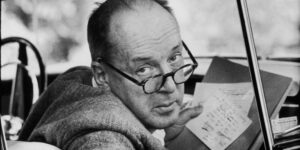
Vladimir Nabokov. Photo Credit: Carl Mydans, Life Magazine © 1959

  1. According to Nabokov, pronounced “up Nina” except the u and the a are silent ↩︎